Topic
Air rowers
Air rowers use a fan flywheel: the harder you pull, the more the air pushes back. A damper lever changes how the stroke feels.
- Resistance
- Fan flywheel
- Sound
- Audible whoosh
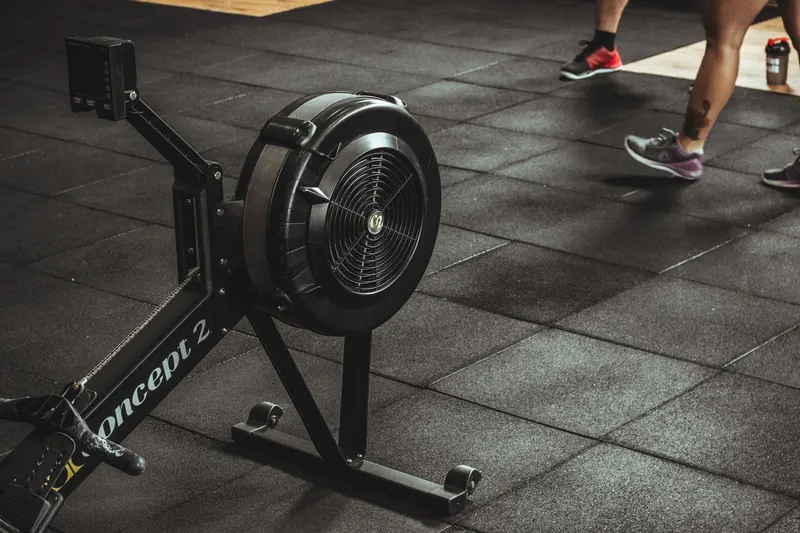
Because resistance rises with effort, an air rower suits beginners and racers alike. The damper opens or closes vents on the fan housing: a higher setting lets more air in and feels heavier, but it does not make the workout harder by itself.
Most clubs and gyms use air rowers, so their monitors report splits per 500 m and watts that people compare across machines. Convert between the two with the split and watts converter.
Check the rail length, the max user weight in kg and whether the frame separates or stands upright for storage.
Common mistakes
- Setting the damper to 10 thinking it is the hardest workout: it mostly makes each stroke heavier and slower.
Guides on this topic
- Water vs air rowing machineWater vs air rowing machine: how the resistance builds, how each sounds, footprint and storage, and what the monitors show, explained without jargon.Comparison
- Magnetic or air rowing machine?Magnetic or air rowing machine? Compare fan noise and draught with quiet fixed levels, and see which type suits flats, shared houses and garages.Comparison
- How to use the Concept2 Logbook and PM5Setting up the PM5 monitor, pairing ErgData, syncing workouts to the online Concept2 Logbook and joining challenges, explained step by step.How-to
- Concept2 RowErg vs WaterRowerConcept2 RowErg vs WaterRower compared by stroke feel, monitor and data, length and storage, sound and resale, so you can pick the right rower.Comparison
- Concept2 PM5 monitor not workingBatteries, the pickup and generator cables, firmware updates with Concept2 Utility and blank or frozen screens: the checks to try on a PM5 in order.Fix
- Concept2 damper settings and drag factor explainedWhat the Concept2 damper lever changes, how to show drag factor on the PM5 and why damper 10 is not the same as the hardest workout.Guide